For years, the unspoken rule in AI was simple: if you wanted the best coding model, you paid for a closed-source one. OpenAI and Anthropic held the performance crown, and open-source alternatives were the budget option — capable enough, but never quite at the frontier. Moonshot AI just shattered that assumption.
Moonshot AI released Kimi K2.6 on April 20, 2026 — a 1 trillion parameter, 32B active, open-weight, native multimodal model capable of running 300-agent parallel swarms. It's not trying to be a cheaper GPT-5.4. It's trying to replace it. And on several of the hardest benchmarks that exist right now, it's succeeding.
This isn't a research preview. This is a production-ready model that developers can download, self-host, and deploy today. The moat that closed-source labs spent years building just got a lot shallower.
What Is Kimi K2.6
Kimi K2.6 is an open-source model developed by Moonshot AI, featuring state-of-the-art coding, long-horizon execution, and agent swarm capabilities. At its architectural core, it is built on a Mixture-of-Experts architecture with 1T total parameters and 32B active per token, delivering frontier-scale intelligence with efficient inference.
It activates 32 billion parameters per token during inference, supports a 262,144-token context window, and ships natively in INT4 quantization — handling text, images, and video in the same architecture without separate vision modules.
Weights are published on Hugging Face under a Modified MIT License, which means you can run it on your own infrastructure, modify it, and integrate it into commercial products without the usual closed-source restrictions hanging over your head.
Performance and Benchmarks
This is where it gets genuinely interesting. Kimi K2.6 leads the field on five of eight major agentic and coding benchmarks — while remaining the only open-weight model in the comparison.
On SWE-Bench Pro — widely considered the harder, more honest version of SWE-Bench that filters out easy single-file fixes — K2.6 scored 58.6, compared to 57.7 for GPT-5.4, 53.4 for Claude Opus 4.6, and 54.2 for Gemini 3.1 Pro.
The most striking result is on Humanity's Last Exam with tools, which tests real-world agentic performance. K2.6 scores 54.0 — leading every model in the comparison, including GPT-5.4 at 52.1, Claude Opus 4.6 at 53.0, and Gemini 3.1 Pro at 51.4.
On LiveCodeBench (v6), it scores 89.6 versus Claude Opus 4.6's 88.8. And on the DeepSearchQA F1 score for deep reasoning, K2.6's 92.5 significantly outperforms GPT-5.4's 78.6.
It's worth being honest: this isn't a clean sweep. On AIME 2026 pure competition math, GPT-5.4 reaches 99.2% versus K2.6's 96.4%, and on GPQA-Diamond, GPT-5.4 scores 92.8% versus K2.6's 90.5%. If your workload is pure math reasoning, GPT-5.4 still has an edge. But for agentic coding — the thing most engineering teams actually care about — K2.6 is the new benchmark leader.
The 12-Hour Stamina That Changes Everything
Raw benchmark scores tell part of the story. The part that matters more for production use is stamina. Most AI coding sessions collapse after a few hundred tool calls — context gets muddled, the model starts losing the thread, and you're back to babysitting it.
Across 4,000+ tool calls, over 12 hours of continuous execution, and 14 iterations, Kimi K2.6 dramatically improved throughput from ~15 to ~193 tokens/sec. That's not a demo. That's an AI agent working through the night on a real optimization problem, iterating independently, and delivering a measurable result by morning.
The model summarizes and elides its own history when approaching the context window, so a 12-hour session does not collapse into lossy recall at hour nine. This automatic context compression is what makes the stamina real — it's not just a big context window, it's intelligent memory management that keeps the agent coherent across the full session.
In Kilo Code's testing, Kimi K2.6 independently iterated through 12 optimization strategies, made over 1,000 tool calls, and precisely modified more than 4,000 lines of code during a continuous session. As Scott Breitenother, Co-founder & CEO of Kilo Code, put it: "K2.6 offers SOTA-level performance at a fraction of the cost. It's tremendously good at long-context tasks across the codebase, as well as the day-to-day work needed to support an always-on agent."
The 300-Agent Swarm Architecture
Beyond solo coding sessions, K2.6 introduces something that feels genuinely new: a coordinated swarm of up to 300 parallel sub-agents, all spawned from a single prompt.
Its agent swarm architecture scales to hundreds of parallel sub-agents for autonomous task decomposition, delivering documents, websites, and spreadsheets in a single run without human oversight.
Kimi K2.6 brings a major upgrade to the Agent Swarm experience — agents now coordinate more effectively in parallel, combining strengths like broad search, deep research, large-scale analysis, long-form writing, and multi-format content generation. This improved coordination allows the swarm to complete deliverables across websites, documents, slides, and spreadsheets in a single run.
Beyond Moonshot's own swarm infrastructure, K2.6 introduces Claw Groups as a research preview — a new feature that opens the agent swarm architecture to an external, heterogeneous ecosystem where multiple agents and humans operate as genuine collaborators in a shared operational space. Users can onboard agents from any device, running any model, each carrying their own specialized toolkits, skills, and persistent memory contexts.
Pricing
Here's where the business case becomes undeniable. Running 100 million input tokens and 10 million output tokens monthly — a realistic load for a mid-sized startup running coding agents — costs roughly $85 with Kimi K2.6. The same workload on Claude Opus 4.6 costs approximately $2,550. Annual difference: $29,580. That's a meaningful engineering hire.
Context caching makes the K2.6 economics even better — cached input tokens cost $0.15 per million versus $0.60 standard, a 75% reduction that happens automatically with no configuration.
At OpenRouter pricing, Kimi K2.6 runs at $0.7448 per million input tokens and $4.655 per million output tokens. For teams currently burning budget on Opus or GPT-5.4 for coding agents, the switch is a no-brainer to at least evaluate seriously.
What This Means for the Industry
The world has long suffered from closed-source systems. In the past, models were seen as two types: closed-source flagship models like GPT-5.4 or Claude Opus, which stood at the pinnacle of performance, and open-source models, which were affordable and flexible but often struggled when faced with demanding engineering challenges.
Kimi K2.6 collapses that binary. It shows how quickly open-weight frontier models are catching up to closed-source leaders, especially in coding, tool use, and long-horizon agent workflows. It is not better at everything, but it is strong enough to be part of the serious comparison now — not just the budget alternative.
Final Thoughts
What Moonshot has done with Kimi K2.6 is genuinely significant — not just as a benchmark achievement, but as a signal about where the AI industry is heading. The assumption that frontier performance requires a closed API and a premium price tag is becoming harder to defend with every release like this one. When an open-weight model can run for 12 hours, coordinate 300 agents, and beat GPT-5.4 on the hardest coding evals — all while costing a fraction of the price — the value proposition of closed-source models needs to be re-examined.
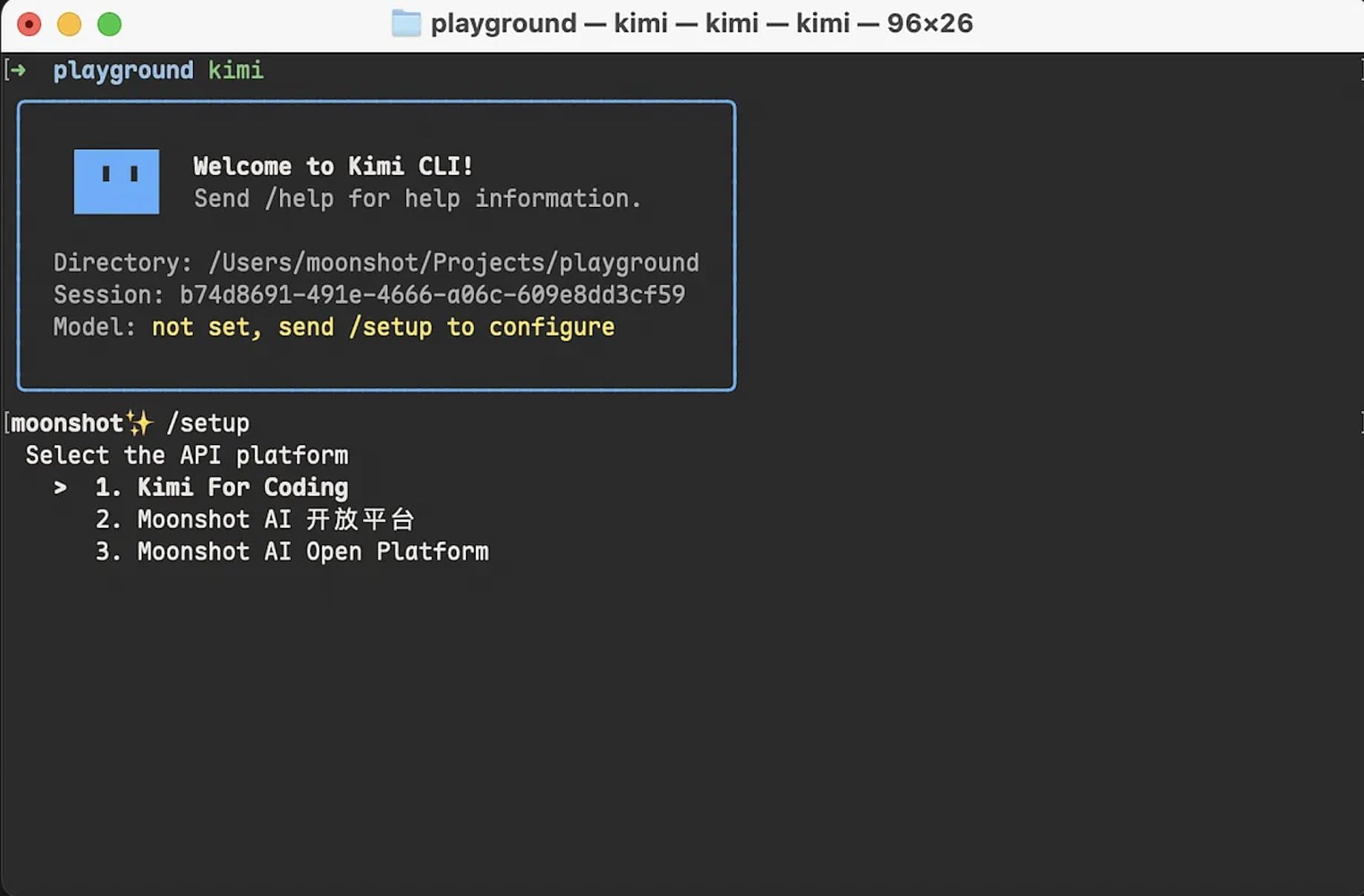
The practical implication for engineering teams is straightforward: if you're running coding agents at scale and you haven't evaluated K2.6, you're leaving real money on the table. The weights are on Hugging Face, the API is live at platform.moonshot.ai, and the Kimi Code CLI is ready to go. The barrier to testing this is essentially zero.
The bigger question isn't whether Kimi K2.6 is good — it clearly is. The question is whether OpenAI and Anthropic will respond by competing harder on open-weight releases, or whether they'll double down on proprietary moats that are visibly eroding. Either way, developers win. Have you started testing K2.6 in your stack yet? Let us know what you're finding.