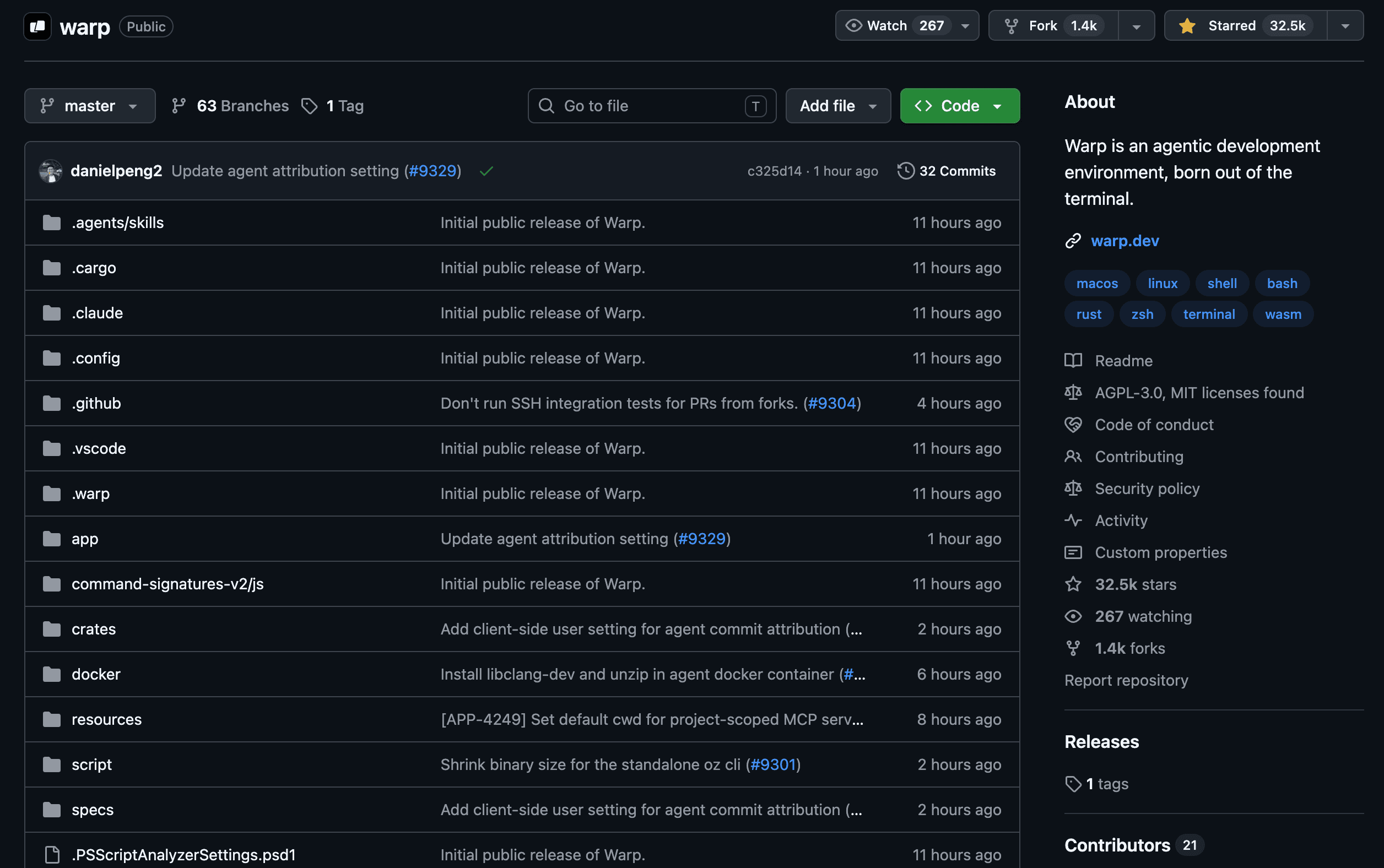
Warp has announced a fundamental change in how it builds its product: the Warp client is now open source, and the community can participate in building it using an agent-first workflow managed by Oz, its cloud agent orchestration platform. For a tool that spent years fielding community requests for exactly this, the timing is deliberate.
When Warp first launched as a terminal five years ago, the plan was always to open source the client. The team debated it every year, and this year it finally became clear that the balance had shifted because of the rise of agents. That context matters. This isn't a pivot forced by competition. It's a calculated bet on a different model of software development.
Today, Warp is used by nearly one million developers at companies including Docker, Ramp, and Peloton, as well as leading AI labs, Big Tech, and over half of the Fortune 500. Opening the codebase at this scale carries real stakes.
What Warp Actually Is
Warp was built to solve two problems the team kept hitting while writing software: terminals haven't kept up with how developers work today, and agentic development tools don't scale beyond your laptop. Warp is a modern terminal built for coding with agents.
What began as a reimagined terminal is now an agentic development environment (ADE) paired with Oz, a cloud-based platform for running and orchestrating coding agents at scale, with built-in visibility and control.
You can use Warp's built-in agent Oz, or run CLI coding agents like Claude Code, Codex, or Gemini CLI. The terminal itself is the interface. Oz is the engine underneath it.
The License and What It Covers
Warp's client codebase is now available on GitHub under the GNU Affero General Public License v3 (AGPLv3). This strong copyleft license ensures that anyone who modifies and distributes the Warp client, or makes it available over a network, must also release the source code of their modifications under the AGPLv3. For developers, this means full transparency and the freedom to audit, inspect, and modify the core terminal application.
One important caveat: the server portion of Warp will remain closed source for now. Oz, the cloud orchestration platform, stays proprietary. The client is open. The infrastructure that runs agents at scale is not.
How the Agent-First Contribution Model Works
This is the part worth paying close attention to. Warp isn't just open sourcing the code and stepping back. It's building a structured workflow where AI agents handle the bulk of implementation.
The primary reason is that Warp thinks it can ship a better product, more quickly, by working with the community to supervise a fleet of agents. The biggest bottleneck to development is no longer writing code. It's all the human-in-the-loop activities around the code: speccing the product and verifying behavior. Agents can handle the implementation heavy lifting really well, which frees contributors to focus on the higher-leverage work of shaping what gets built and making sure it's right.
Developers interested in adding a new feature or addressing an issue can propose a plan on Warp's GitHub issues page. Warp's AI agents will then take a first stab at responding, including asking for more details and potentially generating a fleshed-out specification. A human at Warp will ultimately make the call on whether it's a change the company would want to see in the app.
"The idea is that agents do a bunch of the grunt work around triage and spec'cing out initial ideas, but humans are kind of still in the loop deciding what to build, and providing instruction on how to do it," says Safia Abdalla, a software engineer at Warp.
The CONTRIBUTING.md for the newly public repository makes Oz's role explicit: it automatically triages incoming issues, reviews open PRs, writes specs, and implements features. The agent-readable context files under .agents/skills/, the spec format under specs/, and the WARP.md engineering guide are all designed to be consumed by coding agents, including Oz itself.
OpenAI as Founding Sponsor
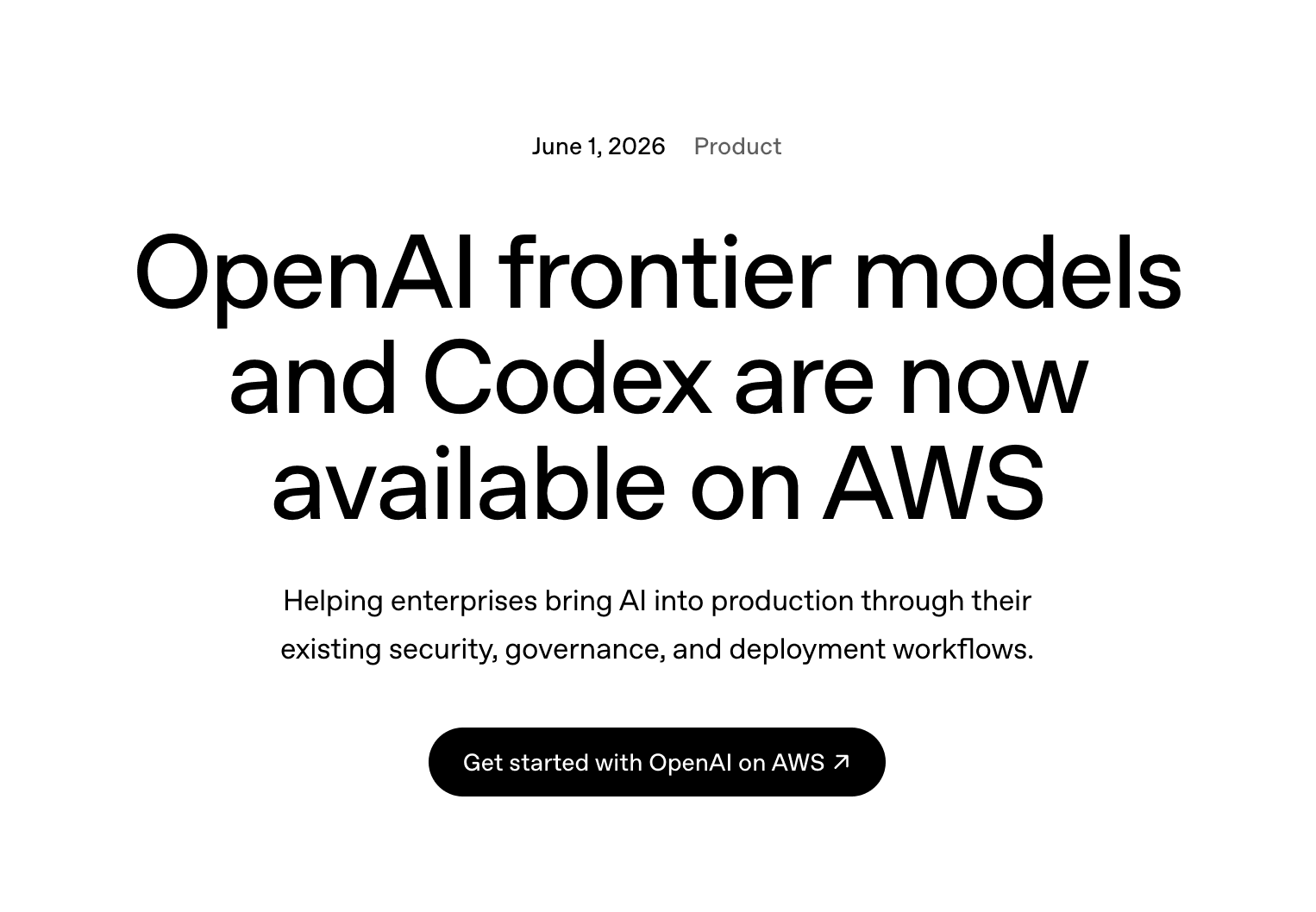
OpenAI is the founding sponsor of the new, open-source Warp repository, and the new agentic management workflows are powered by GPT models. GPT-5.5 is among the models powering the agentic workflows that ship improvements to the codebase.
At least at the start, Warp will pay for Oz usage and AI credits for contributors who want to use the platform to build features. Developers who prefer can also work on their own computers with tools of their choice and submit a pull request through GitHub when the work is ready for review.
Key Product Changes Shipping Alongside the Open Source Release
Warp isn't releasing the code in isolation. Several product updates accompany the launch:
- Support for a much wider range of open source models, including Kimi, MiniMax, and Qwen, along with a new "auto (open)" model-routed version that picks the best open model for the task.
- Much easier customization of the Warp experience, from just a terminal, to minimal features for improving agentic development like a diff view and file tree, to a full-fledged ADE with built-in agents.
- A new settings file so that users and agents get programmatic control over settings and easy portability between devices.
What This Means for the Industry
While other open-source projects are rejecting AI-generated contributions, Warp wants to accept AI code in a managed way. That's a meaningful distinction. Most projects are treating agent-generated PRs as noise. Warp is structuring its entire contribution pipeline around them.
There isn't a full-featured open agentic development environment on the market, and Warp wants to offer the community an alternative to closed-source options provided by more established companies. No one knows exactly what the future of agentic development will look like, and Warp thinks the community ought to be able to participate in shaping it.
"Put simply, we believe that a diverse set of contributors with unique ideas, combined with Oz agents running structured workflows and continuous feedback loops, will produce a better product than we could build with our internal team alone," said Zach Lloyd, founder and CEO of Warp.
Final Thoughts
The most technically interesting thing here isn't the license. It's the contribution architecture. Warp has built a workflow where Oz handles initial triage and review, human subject-matter experts handle final approval, and the whole pipeline is documented in machine-readable skill files. That's a real engineering decision with real tradeoffs, and teams building internal developer platforms should study it regardless of whether they ever use Warp.
The open question is whether the community actually shows up. The community spent years skeptical of Warp's closed model, and the repository had strong early momentum. But GitHub stars on launch day are not the same as sustained contribution. Keeping contributors engaged after the initial excitement fades will be the real test of whether this model holds up.
For now, the source code is live at github.com/warpdotdev/warp under AGPL. If you've been waiting to dig into how a production-grade Rust terminal is built, or you want to contribute to what might become a reference implementation for agentic development tooling, this is a good time to look. What do you think? Drop your thoughts in the comments.
Frequently Asked Questions
5 questions
1Is all of Warp now open source?
The Warp client is open source under the AGPLv3 license. The server-side infrastructure, including the Oz cloud orchestration platform, remains closed source.
2What license does Warp use?
Warp uses the GNU Affero General Public License v3 (AGPLv3). Anyone who modifies and distributes the client, or runs it over a network, must also release their modifications under the same license.
3What is Oz and how does it relate to the open source release?
Oz is Warp's cloud agent orchestration platform. It automatically triages GitHub issues, writes specs, and implements features. It plays a central role in the open source contribution workflow, though the platform itself stays proprietary.
4Can I contribute using my own AI tools instead of Oz?
Yes. Developers can use any tools they prefer locally and submit a pull request through GitHub. Oz usage is offered as an option, not a requirement.
5Who is sponsoring Warp's open source effort?
OpenAI is the founding sponsor of the open source repository, with GPT models powering the agentic contribution workflows, including GPT-5.5.