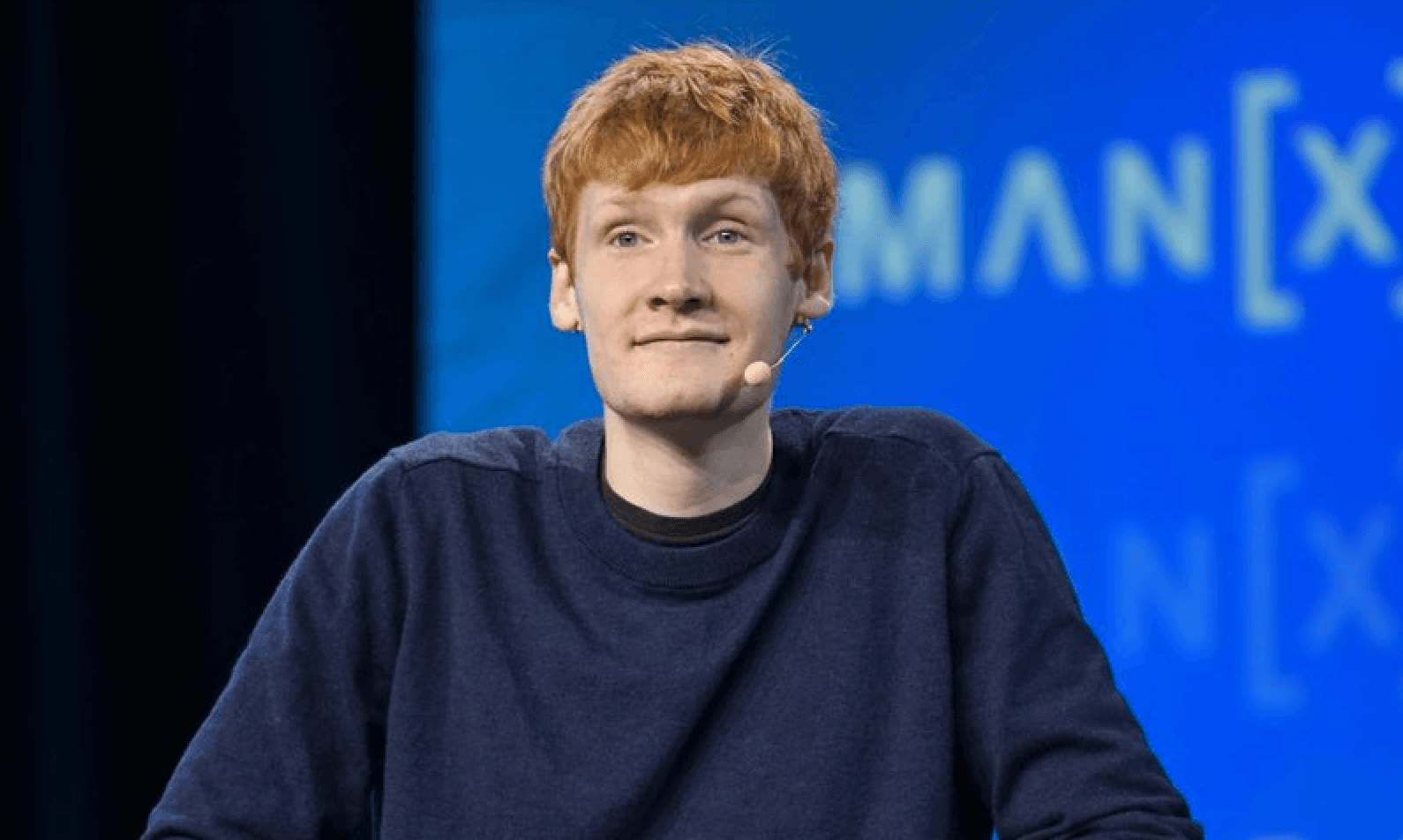
In the compressed, chaotic timeline of the modern AI boom, few stories move as fast as Cursor's. In just over three years, a group of MIT students turned a frustration with existing developer tools into a company now valued at a potential $60 billion — and the person steering that rocket ship is 25-year-old CEO Michael Truell. On April 22, 2026, SpaceX announced a landmark deal that sent shockwaves through the technology industry, and Truell's name was at the center of it all.
From Google intern at 18 to a billionaire at 25, Cursor CEO Michael Truell's rise is one of Silicon Valley's fastest. But to understand why this deal matters — to AI, to enterprise software, and to the future of how humans write code — you need to understand the man, the product, and the strategic chess game being played at the highest levels of the tech industry.
Who Is Michael Truell?
Truell grew up in New York City and attended the Horace Mann School, a private prep school in the Bronx. He'd always had an interest in technology, and started coding at age 11 to make his own mobile games.
By age 18, Truell had just wrapped up his first year at MIT and was completing a summer internship at Google, where he worked on "language models for feed ranking," according to his profile on LinkedIn. That early exposure to machine learning at one of the world's most sophisticated AI organizations clearly left a mark.
Truell met Ali Partovi, an early investor in Facebook and Airbnb, during his internship, as Partovi was recruiting for his Neo Scholars program. Truell immediately impressed him by completing a written coding test "in record time." After he left that meeting, Partovi put a star with a circle next to his name on a list of potential Neo Scholar candidates, meaning he was so impressed that he'd invest in any project Truell pursued.
Truell and his MIT classmates Aman Sanger, Sualeh Asif, and Arvid Lunnemark were interested in AI before OpenAI changed the industry by launching ChatGPT in 2022. A year before that, the Cursor cofounders were thinking about what they should do in AI. Truell and his cofounders were obsessed with Microsoft's GitHub Copilot, which launched for individual developers in 2022 — but the program had its limits, they found, and could be improved.
What Cursor Actually Does
Cursor is a coding assistant with its own integrated development environment, or IDE, where the company's AI is built-in. At its most basic level, Cursor's AI capabilities let users code more quickly by constantly working to predict the code a user is likely to write next.
The tool, which has been publicly praised by Nvidia CEO Jensen Huang, learns a developer's coding style, then autocompletes, reviews, and, when necessary, edits code.
With the launch of Cursor 3 earlier this month, the company has improved on its agentic coding, in which AI can write code on its own with broad user guidance — a move to compete with Anthropic's Claude Code, which launched just over a year ago but already has gained popularity among programmers.
Cursor still uses and sells access to Claude and GPT models even as both firms roll out their own coding tools, an awkward arrangement that this new SpaceX partnership may be designed to eventually escape.
A Growth Trajectory That Defies Gravity
The numbers behind Cursor's rise are staggering by any measure, not just by startup standards.
- Cursor raised an initial $60 million funding round in June 2024. By the end of 2025, it had raised three more funding rounds that brought in $3.3 billion, skyrocketing its valuation from $2.5 billion to $30 billion in a single year.
- Cursor hit the $100 million annualized revenue milestone in January 2025, around one year and eight months after it launched its first product in early 2023. Its annualized revenue crossed $2 billion in February.
- Cursor has more than 300 employees, and 67% of Fortune 500 companies use the firm's technology. Some well-known companies that use Cursor include Salesforce, Samsung, and Budweiser.
For context, Slack took two and a half years to reach $100 million in annualized revenue, while Dropbox took four years to cross the same mark. Cursor did it in under two.
The SpaceX Deal Explained
SpaceX said it's struck a deal with artificial intelligence startup Cursor, obtaining the right to acquire the company for $60 billion later this year, or to pay $10 billion for work they are doing together.
The joint announcement stated: "The combination of Cursor's leading product and distribution to expert software engineers with SpaceX's million H100 equivalent Colossus training supercomputer will allow us to build the world's most useful models."
The deal's structure is as unusual as it is audacious. Until a few hours before SpaceX announced its deal, Cursor was on track to close a $2 billion funding round later this week. The round would have valued the company at $50 billion. Cursor was apparently running a parallel process, negotiating a potential acquisition by SpaceX while simultaneously finalizing a private funding round with investors that include Andreessen Horowitz, Thrive, Nvidia, and Battery Ventures.
SpaceX is delaying the potential acquisition of Cursor until after its IPO this summer. This is largely because the company wants to avoid updating its confidential financial filings before the listing, and it will be easier to finance the $60 billion purchase using its new, publicly traded stock.
Why SpaceX Wants Cursor So Badly
The strategic logic on SpaceX's side is clear. For xAI, the deal represents an effort to catch up to AI competitors OpenAI, which makes Codex, and Anthropic's Claude.
SpaceX would also like public investors to value it as more than just a space and satellite business. By promising to potentially acquire Cursor, SpaceX positions itself as an AI company, giving it a chance to garner the much higher valuation multiple that Wall Street currently assigns to AI companies.
Cursor plans to utilize SpaceX's substantial computing infrastructure to advance its own coding model, Composer, which debuted late last year. xAI is sitting on top of a massive compute footprint it built out in a hurry. Thanks to its owner, Elon Musk, xAI has been able to raise truckloads of cash to scale its data centers.
The SpaceX IPO, targeted for June, is aiming for a $1.75 trillion to $1.8 trillion valuation, potentially making it the largest in history.
What This Means for the AI Industry
The Cursor-SpaceX deal is not happening in a vacuum. The SpaceX-Cursor tie-up shows how AI startups continue to find larger partners in order to secure the compute needed to continue improving their models. Earlier this week, for instance, Amazon announced a $5 billion investment in Anthropic that will give the AI startup broader access to its Trainium chips.
There are also questions worth watching. The deal would pair Cursor's coding models with SpaceX's Colossus supercomputer, raising questions for enterprise customers around model neutrality and data contracts. Cursor may present national security concerns, especially when working with SpaceX. Reports emerged last month that the latest version of its Composer model was built upon an open-source model from Chinese startup Moonshot AI.
Either way, it's a big win for Truell, who, just a few years after dropping out of MIT, is worth an estimated $1.3 billion, according to Forbes.
Final Thoughts
What makes Truell's story genuinely compelling isn't just the scale of the outcome — it's the clarity of the conviction that got him there. He and his cofounders saw GitHub Copilot and thought they could do better. That's it. No grand pivot narrative, no viral moment, no celebrity backer who made it happen overnight. Just a group of MIT students who believed deeply in a specific thesis about how AI would reshape software development, and then executed relentlessly on it.
The SpaceX deal is a fascinating inflection point, not just for Cursor but for the entire AI coding category. If the acquisition closes, it fundamentally changes the competitive landscape — giving Elon Musk's growing AI empire a consumer-facing product with real enterprise penetration and a developer community that's genuinely passionate about the tool. Whether that's good for Cursor's users in the long run remains an open and important question.
One thing is certain: the era of AI coding assistants as a niche developer toy is over. With $60 billion on the table and the world's largest companies already embedded in Cursor's ecosystem, this is now a mainstream battle for the future of how software gets built. Are you using Cursor today — and does the SpaceX deal change how you think about its future? Let us know in the comments.