OpenAI began testing ads in ChatGPT in the U.S. in February 2026, targeting logged-in adult users on the Free and Go subscription tiers. That pilot was always framed as a learning exercise. Three months later, the company has moved fast. It marks the biggest expansion yet since OpenAI launched advertising in ChatGPT, opening the platform from a handful of large test partners to any business that wants in, category restrictions aside.
A Reuters report in March suggested OpenAI banked over $100 million in revenue for its U.S. ad pilot after just six weeks. That number, if accurate, explains the pace. OpenAI is not treating this like an experiment anymore. It's building an ads business.
As someone who covers AI tools daily, this is one of the more consequential product moves I've tracked this year. Not because ads in a chatbot are novel, but because of the sheer scale ChatGPT operates at and the very specific intent signals it captures from users mid-conversation.
What Is the ChatGPT Ads Platform
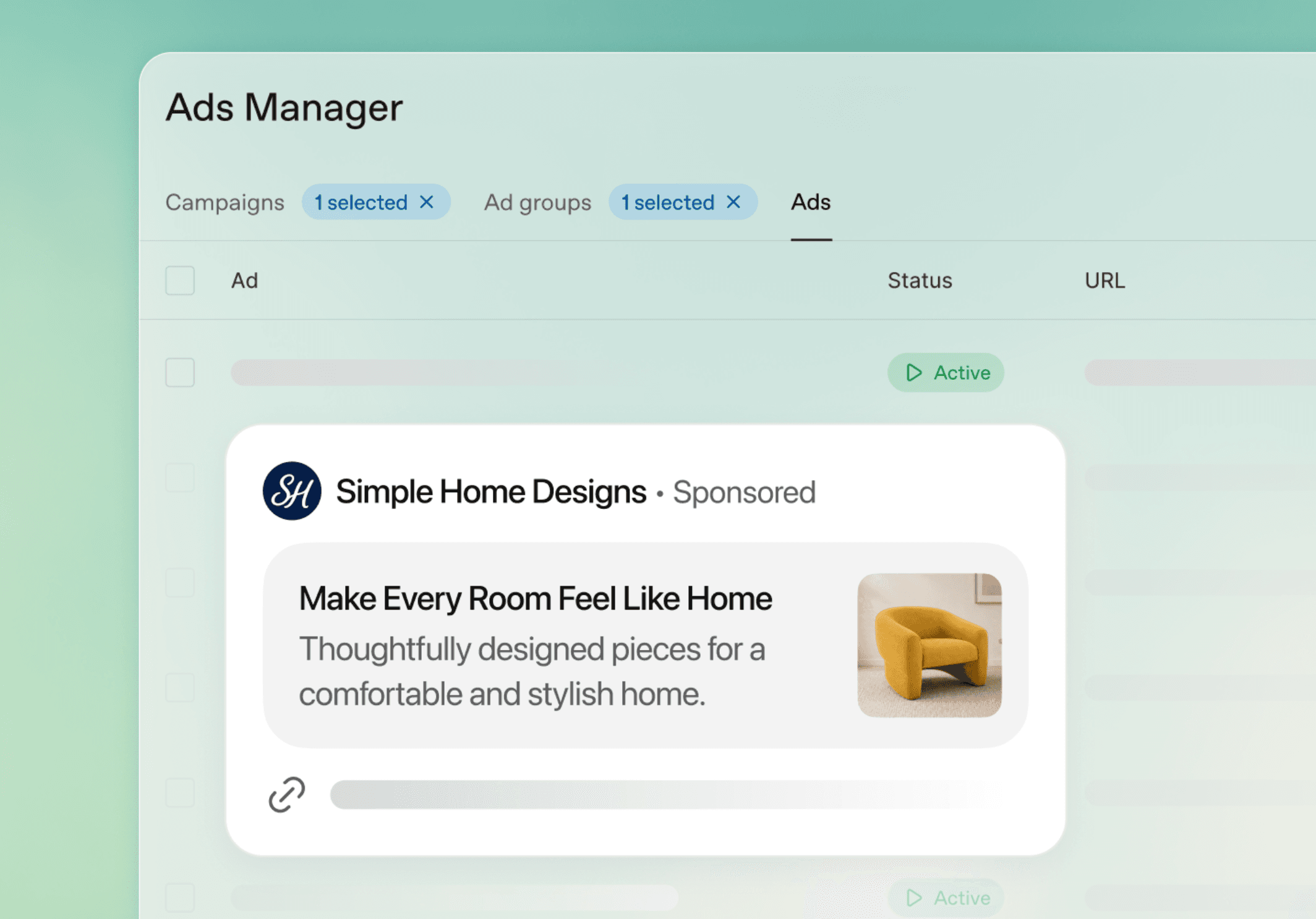
OpenAI Ads Manager Beta is the platform for creating, launching, and managing campaigns in ChatGPT Ads, with tools to monitor performance and make updates in one place. OpenAI is beginning to roll out a beta self-serve Ads Manager that allows advertisers in the U.S. to sign up and purchase ads directly to appear in ChatGPT, making it easier for companies of all sizes, from SMBs and startups to global brands, to grow their businesses via ChatGPT.
OpenAI shipped its self-serve ChatGPT Ads Manager, opening up the platform to any U.S. advertiser, dropping the previous $50K minimum spend floor, and introducing CPC bidding alongside the existing CPM model. Businesses can access the platform at ads.openai.com.
How ChatGPT Ads Work
When you see an ad, it is always clearly labeled as sponsored and visually separated from the organic answer. During the test, OpenAI decides which ad to show by matching ads submitted by advertisers with the topic of your conversation, your past chats, and past interactions with ads. For example, if you're researching recipes, you may see ads for meal kits or grocery delivery.
Ads can appear below the end of a response. During the test, you may see a single ad unit below a ChatGPT response when there's a relevant match to your chat, and that unit may feature one or more items from an advertiser.
An ad is the creative unit shown in ChatGPT. It includes your brand name, logo, title, copy, landing page, and image. The format is intentionally restrained. Until a more robust measurement system is in place, the main lever advertisers have to improve performance is the creative itself, currently confined to a single format, a small favicon with text.
Key Technical Highlights
- Advertisers can now create ChatGPT ads through partners or a new beta self-serve Ads Manager, with cost-per-click (CPC) bidding and expanded measurement tools giving businesses more flexible ways to buy, manage, and understand campaign performance.
- OpenAI recently launched Conversions API and pixel-based measurement so advertisers can better understand what happens after someone engages with an ad, such as a purchase, lead, sign-up, or other meaningful action.
- Advertisers do not have access to your chats, chat history, memories, or personal details. Advertisers only receive aggregate information about how their ads perform, such as number of views or clicks.
- Ads are not eligible to appear near sensitive or regulated topics, including health, mental health, or politics.
- Ads do not appear in accounts where someone tells OpenAI or they predict the user is under 18, and Temporary Chats will not show ads.
- Plus, Pro, Business, Enterprise, and Education tiers will not have ads.
Agency Partners and Ad Tech Integrations
OpenAI has been collaborating with leading agency partners including Dentsu, Omnicom, Publicis, and WPP to support businesses purchasing ChatGPT ads. Technology partners such as Adobe, Criteo, Kargo, Pacvue, and StackAdapt have also been added.
The likes of Adobe, Criteo, Kargo, Pacvue, and StackAdapt handle campaign budgeting, bidding, and creative while OpenAI's ads system controls all the delivery decisions. That division of responsibility is deliberate. Show the wrong ad in the wrong conversation and the trust that makes ChatGPT's intent signals valuable starts to erode. That is why delivery has been kept in-house. Every decision about where an ad appears and whether it is relevant enough to appear at all runs through OpenAI's own system.
Omnicom Media confirmed that more than 30 of its clients are set to participate in the OpenAI Ad Pilot Program, including agencies and brands spanning multiple consumer categories.
What This Means for Marketers
Many ChatGPT sessions involve active research and decision-making behavior. Users are often comparing products, evaluating services, or asking for recommendations before taking action elsewhere. That creates a very different environment from passive scrolling on social platforms.
"The introduction of ads in ChatGPT creates a new way for brands to introduce products and services that consumers might not otherwise encounter through organic interactions alone, appearing at a moment when engagement and relevance are inherently high," said Justin Wroe, chief commercial officer at Omnicom Media.
Still, the platform is early and skepticism is warranted. "ChatGPT has enormous reach but low depth compared to established platforms," according to Claire Holubowskyj, Senior Research Analyst at Enders Analysis, with marketers also facing limited buying control and predictability. Independent estimates of ChatGPT ad CTR sit around 1.3% versus Google Search's 29.2%, and aggregated reporting means you don't get conversation-level visibility.
"By adding things like an ads manager, CPC bidding, pixel measurement and CAPI, OpenAI is demonstrating that it understands the basic building blocks that are necessary for advertisers to feel comfortable testing on ChatGPT," said Debra Aho Williamson, founder and chief analyst at Sonata Insights.
OpenAI's Advertising Principles
OpenAI has been explicit about what it will and won't do with user data. Ads do not influence the answers ChatGPT gives you. Answers are optimized based on what's most helpful to you, and ads are always separate and clearly labeled.
Users control how their data is used, can turn off personalization, and can clear the data used for ads at any time. OpenAI will always offer a way to not see ads in ChatGPT, including a paid tier that's ad-free.
Advertisers ought to take care before leaping into the ChatGPT ad era, cautioned Miranda Bogen, director of the Center for Democracy and Technology's AI Governance Lab. "In introducing ads to ChatGPT, OpenAI is starting down a risky path," she explained, warning that "AI companies should be extremely careful not to repeat the many mistakes that have been made" from personalized ads on social media.
Final Thoughts
What's interesting here isn't just that ChatGPT now runs ads. It's that OpenAI built a full advertising stack, from a self-serve manager to a Conversions API to CPC bidding, in roughly three months. This is OpenAI moving from a closed, high-touch pilot to the kind of standardized advertising infrastructure performance marketers actually expect: self-serve buying, click-based bidding, conversion tracking, and partner integrations. That's a fast build for a company that had no ads product at the start of the year.
The open question for me is measurement. Third-party measurement is on the roadmap, but the company doesn't have partners or an exact timeline, and securing both is a rite of passage for any ads business with serious ambitions. Until independent verification exists, advertisers are largely trusting OpenAI's own reporting. That's a meaningful limitation, and one that will determine how aggressively performance budgets migrate to ChatGPT from Google and Meta.
The intent signal is real. The audience is large. The ad format is minimal and the measurement is thin. For now, this is a channel worth testing with modest budgets, not one to bet the quarter on. What do you think? Are you planning to run ads on ChatGPT? Drop your thoughts in the comments.
Frequently Asked Questions
5 questions
1What subscription tiers will see ads in ChatGPT?
The test is for logged-in adult users on the Free and Go subscription tiers. Plus, Pro, Business, Enterprise, and Education tiers will not have ads.
2Do ChatGPT ads affect the quality of answers?
No. Ads do not influence the answers ChatGPT gives you. Answers are optimized based on what's most helpful to you.
3Can advertisers access my chat history?
OpenAI does not share your conversations with advertisers and never sells your data. Advertisers do not have access to your chats, chat history, memories, or personal details, and only receive aggregated, non-identifying information about how their ads perform.
4How do I get started as an advertiser on ChatGPT?
Businesses can register as advertisers, add payment information, set budgets, bids and pacing, upload ads, launch and manage campaigns, and view performance in the portal at ads.openai.com.
5Can I opt out of seeing ads in ChatGPT?
You can control the ads you see in ChatGPT, including dismissing ads, sharing feedback, learning how and why you're being shown a particular ad, deleting your ad data with one tap, and managing ad personalization at any time.