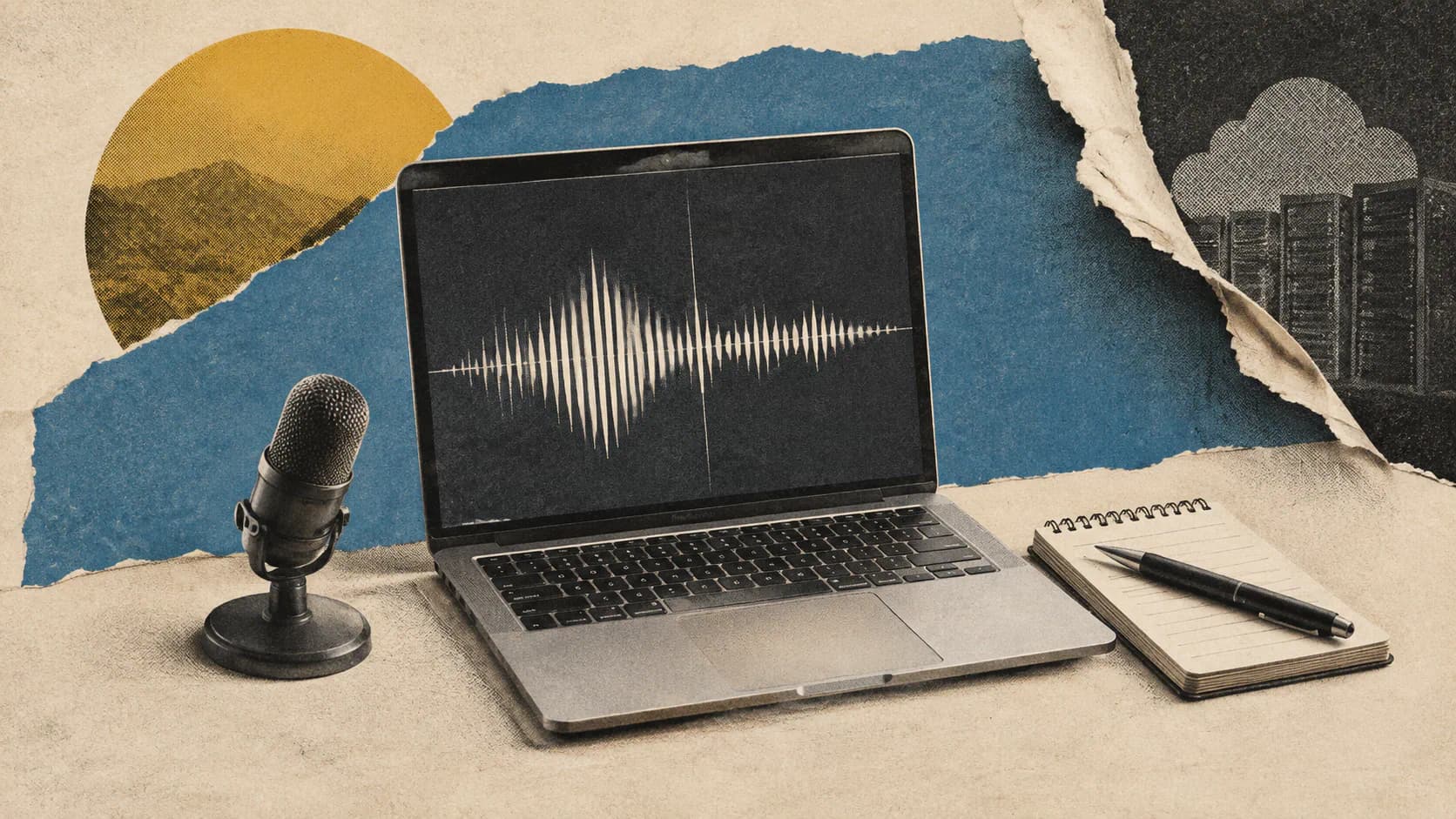
BetterWispr lets Mac users hold a shortcut, speak and insert the resulting text into the application they were already using, without a subscription or account. The developer says its built-in speech models run on the computer, work offline once their required assets are installed, and never automatically fall back to a cloud transcription service.
The app is free and Apache-2.0 licensed, with downloads for Apple Silicon and Intel Macs running macOS 14 or later. Optional cleanup can remove verbal clutter, while a separate meeting notetaker can produce local summaries.
The Show HN launch thread passed 100 comments within its first day, documenting circulation among developers. That attention is not representative product testing or evidence of transcription accuracy.
BetterWispr’s privacy-first configuration needs no API key or mandatory cloud connection. Users can optionally connect outside providers, though, so not every configuration keeps speech and transcripts on the Mac.
Local Models Have No Automatic Cloud Fallback
BetterWispr’s documented speech options include Apple’s on-device speech recognition, NVIDIA Parakeet models and Whisper. The main choices highlighted on the product page are:
- Apple speech: Availability depends on the selected language and the operating system’s speech assets.
- Parakeet TDT v3: Supports 25 European languages.
- Parakeet Japanese: Provides a dedicated Japanese option.
- Whisper Large v3 Turbo: Offers broader multilingual recognition through WhisperKit.
The repository also lists Parakeet v2 for English. These are selectable speech-recognition engines, not evidence that every model performs equally well on every supported Mac.
Parakeet and Whisper require an initial model download. Apple speech does not require the same app-managed download, although compatible operating-system assets still matter. Once the necessary files are present, the developer says local transcription works offline.
Choosing a built-in model does not authorize the app to upload a recording when local recognition fails. BetterWispr says there is no automatic cloud fallback; users may need to switch models or troubleshoot unavailable language assets instead.
The repository’s API documentation lists optional connections to Sarvam AI, Smallest AI and OpenAI-compatible endpoints, including the possibility of a localhost endpoint. When an external connection is selected, audio goes to that endpoint and its pricing and retention policies apply. API keys are stored in the macOS Keychain.
“Free and local” describes the built-in workflow, not every provider a user could attach. Returning to a built-in speech model restores local transcription, but any separate cleanup or summarization connection needs its own check.
Cleanup and App Styles Solve Different Problems
BetterWispr separates recognizing speech from deciding how the finished text should look.
Its default Light cleanup removes English filler words, repetitions and false starts. None preserves every word, while Medium additionally edits English text for clarity using the selected notes model. Apple Intelligence or a local Ollama model can perform that additional processing on the Mac.
An email draft may benefit from removing repeated phrases; a quotation or record of exact wording may not. BetterWispr retains raw and corrected versions in local history, and its Use Original control restores the raw transcript.
Users can also set per-app tones for personal chats, work applications, email and other apps. These styles are separate from cleanup. According to the product page, casual styling removes the final period, very casual styling also removes capitalization, and formal styling leaves the words alone.
The developer explicitly limits filler cleanup, styles and voice commands to English, even though the speech models recognize additional languages. A Japanese or European-language transcription option does not imply equivalent cleanup support.
For names and specialist terms, users can add spelling hints and replacements, or correct a misheard word in history or immediately after insertion. BetterWispr can save those corrections to its vocabulary, with learning available as an optional setting.
The cleanup documentation identifies a privacy exception: selecting Claude Code, Codex or an API connection for rewriting sends the dictation to that provider. Local speech recognition alone does not guarantee that the subsequent editing stage remains local.
Meeting Notes Have Stricter Requirements Than Dictation
The built-in Notetaker records a live transcript alongside the user’s own written notes. It labels microphone input as Me and audio from other applications as Them.
Capturing that second source requires macOS 14.2 or later, above the app’s general macOS 14 minimum. Anyone installing specifically to capture both sides of a call needs to meet the higher requirement.
For summaries, decisions and action items, BetterWispr offers Apple Intelligence or a local Ollama model. The product page specifies that its Apple Intelligence summarization option requires a supported Mac running macOS 26. Downloading the basic app on a macOS 14 machine does not make that option available.
Ollama provides an alternative local route, but users still need a suitable local model. Basic transcription support and the ability to run a summarization model are separate requirements. Without a notes model, BetterWispr still saves the transcript and the user’s notes.
Optional Claude Code, Codex and OpenAI-compatible connections can also process meeting transcripts. As with dictation cleanup, the developer says those choices send the transcript to the selected provider. A private meeting workflow therefore requires checking both the speech model that creates the transcript and the notes model that summarizes it.
The Me and Them labels identify audio sources. The supplied documentation does not establish that BetterWispr distinguishes every individual participant in a group meeting, so users should not assume those labels amount to full speaker identification.
Local History Is Not Encrypted by the App
Keeping processing off a transcription server reduces one form of data exposure. BetterWispr still leaves records on the computer.
The repository’s privacy section says settings, vocabulary and history are stored in a local workspace.json file under the app’s Application Support directory. It explicitly describes that file as not encrypted. Model files sit in a neighboring Models folder.
The same documentation says audio is written to temporary files and deleted after each recording. Dictation history, however, can retain both raw and corrected text unless the user turns history off. For sensitive work, users still need to consider who can access the Mac, its local files or any copies of those files.
The Apache-2.0 license makes the application’s source available for inspection and modification. Third-party code and model weights retain their own terms, according to the repository. Open source offers visibility into the implementation; it is not, by itself, evidence of an independent security audit.
Sources
- BetterWisprbetterwispr.com
- Show HN launch threadnews.ycombinator.com
- repository’s API documentationgithub.com